When I first read Google’s documentation about Google Flow credits, I thought I had misunderstood it.
Unfortunately, after reading it again, the numbers still don’t make sense.
𝗧𝗛𝗘 𝗡𝗨𝗠𝗕𝗘𝗥𝗦
According to Google’s own documentation:
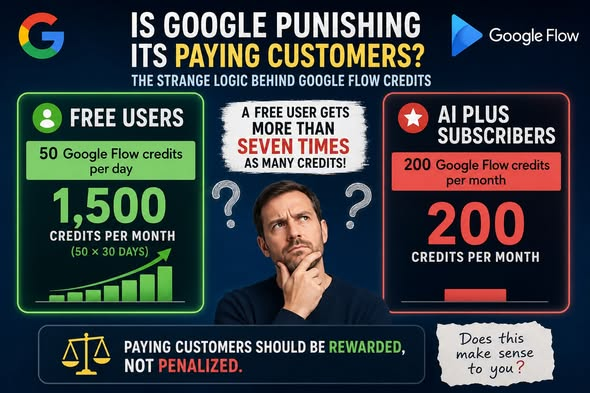
• Free users receive 𝟱𝟬 Google Flow credits per day.
• Google AI Plus subscribers receive 𝟮𝟬𝟬 Google Flow credits per month.
Let’s do the math.
• Free user: 𝟱𝟬 × 𝟯𝟬 days = approximately 𝟭,𝟱𝟬𝟬 credits per month.
• Google AI Plus subscriber: 𝟮𝟬𝟬 credits per month.
That means a free user has access to 𝗺𝗼𝗿𝗲 𝘁𝗵𝗮𝗻 𝘀𝗲𝘃𝗲𝗻 𝘁𝗶𝗺𝗲𝘀 as many Google Flow credits as someone who is paying for Google AI Plus.
𝗪𝗛𝗘𝗥𝗘 𝗜𝗦 𝗧𝗛𝗘 𝗜𝗡𝗖𝗘𝗡𝗧𝗜𝗩𝗘 𝗧𝗢 𝗦𝗨𝗕𝗦𝗖𝗥𝗜𝗕𝗘?
Traditionally, subscription services reward customers for supporting the platform.
Paying customers expect more features, better performance, higher limits, or additional value.
When looking only at Google Flow credits, however, the opposite appears to be true.
Why would anyone pay to receive fewer credits?
Yes, Google AI Plus includes Gemini features and additional AI capabilities. However, for customers whose primary interest is Google Flow, those extra features do not compensate for receiving 𝗱𝗿𝗮𝗺𝗮𝘁𝗶𝗰𝗮𝗹𝗹𝘆 𝗳𝗲𝘄𝗲𝗿 Flow credits.
𝗧𝗛𝗜𝗦 𝗦𝗘𝗡𝗗𝗦 𝗧𝗛𝗘 𝗪𝗥𝗢𝗡𝗚 𝗠𝗘𝗦𝗦𝗔𝗚𝗘
Whether intentional or not, this pricing model sends an unfortunate message:
“Thank you for paying. Here are fewer resources than our free users receive.”
That is difficult for customers to understand and even harder to justify.
People generally accept paying when they receive 𝗮𝗱𝗱𝗶𝘁𝗶𝗼𝗻𝗮𝗹 𝘃𝗮𝗹𝘂𝗲.
They rarely accept paying for less.
𝗔 𝗕𝗘𝗧𝗧𝗘𝗥 𝗔𝗣𝗣𝗥𝗢𝗔𝗖𝗛
Google could resolve this confusion with a much fairer model.
For example:
• Free users: 𝟱𝟬 credits per day (trial allowance)
• AI Plus subscribers: At least the equivalent monthly value—or more
• Higher subscription tiers: Significantly increased credit allocations
This would reward loyal customers instead of making them feel disadvantaged.
𝗧𝗥𝗔𝗡𝗦𝗣𝗔𝗥𝗘𝗡𝗖𝗬 𝗠𝗔𝗧𝗧𝗘𝗥𝗦
If there are technical or business reasons behind the current credit allocation, Google should explain them clearly.
Without that explanation, many users will naturally conclude that paying customers are receiving worse value than free users.
That is not the impression any company should want to create.
𝗙𝗜𝗡𝗔𝗟 𝗧𝗛𝗢𝗨𝗚𝗛𝗧𝗦
This is not about demanding unlimited credits.
It is about 𝗳𝗮𝗶𝗿𝗻𝗲𝘀𝘀 and 𝗰𝗼𝗻𝘀𝗶𝘀𝘁𝗲𝗻𝗰𝘆.
Customers who choose to support a service financially should never feel that they are getting less than those who pay nothing.
Google has built an outstanding AI ecosystem, but this particular credit structure creates unnecessary confusion and frustration.
Hopefully, Google will reconsider this policy and ensure that paying subscribers are 𝗿𝗲𝘄𝗮𝗿𝗱𝗲𝗱—not 𝗽𝗲𝗻𝗮𝗹𝗶𝘇𝗲𝗱—for their loyalty.
What do you think?
Does this pricing model make sense to you?